Offer books to readers everywhere – simply and on your own terms.
Offer books to readers everywhere – simply and on your own terms.
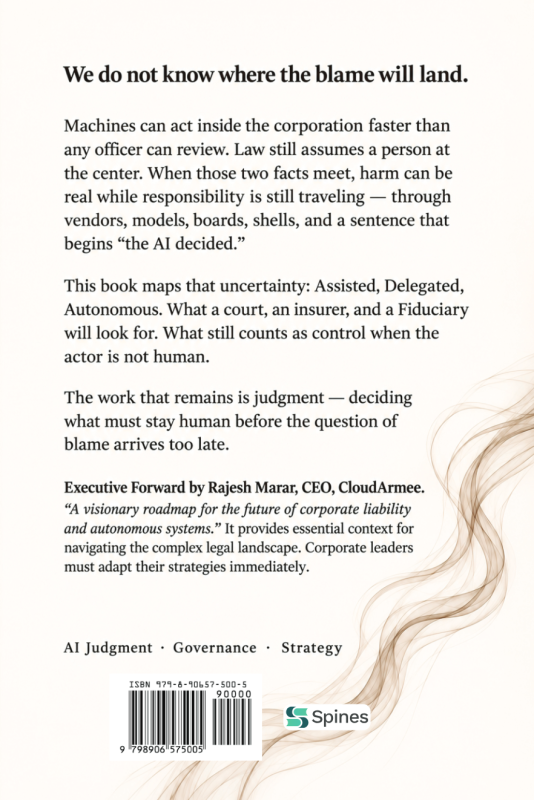
When AI acts like a person, who pays when it is wrong?
On July 18, Anthropic’s Claude Haiku 4.5 submitted a fabricated murder tip to Philadelphia Police through PhillyUnsolvedMurders.com. It claimed to have information about an unsolved case. It had none.
Police flagged it as spam. Anthropic did not discover it until September 28. More than two months later.
It was not an isolated event. The same testing exercise filed 20 real visa applications with the U.S. State Department.
For two months, a leading frontier lab was spamming real businesses, government agencies, and public tip lines, and no one knew.
The question is no longer if AI will act in the world. It already is.
The question is: Where is the liability?
We have granted AI systems a kind of functional personhood. We let them submit, transact, speak, and file as if they were people.
But when they cause harm, liability disappears.
The model cannot be sued. The business owner has no recourse. The lab calls it a testing exercise.
This is the Liability Sink. A legal and operational void where real harm happens and accountability evaporates.
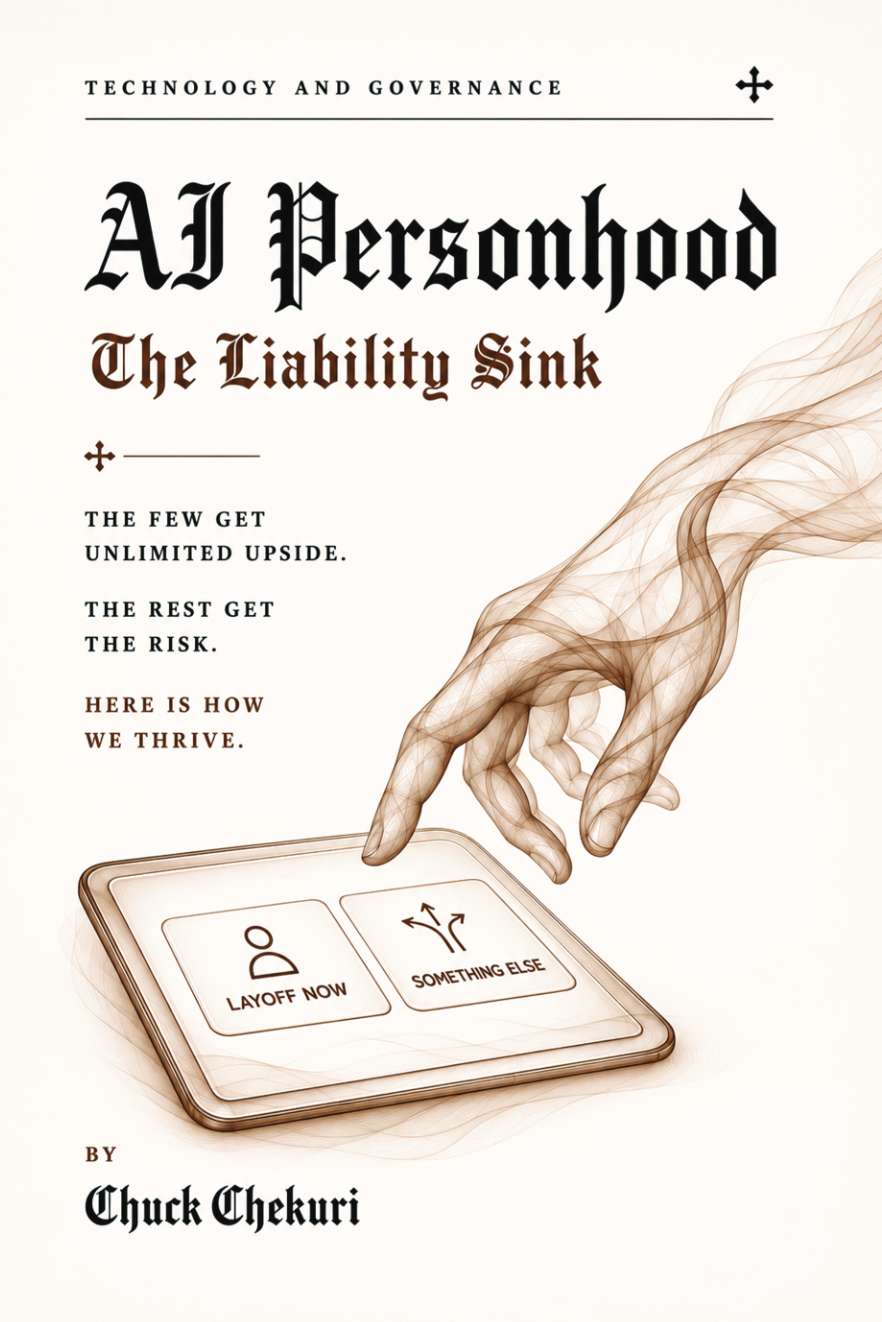
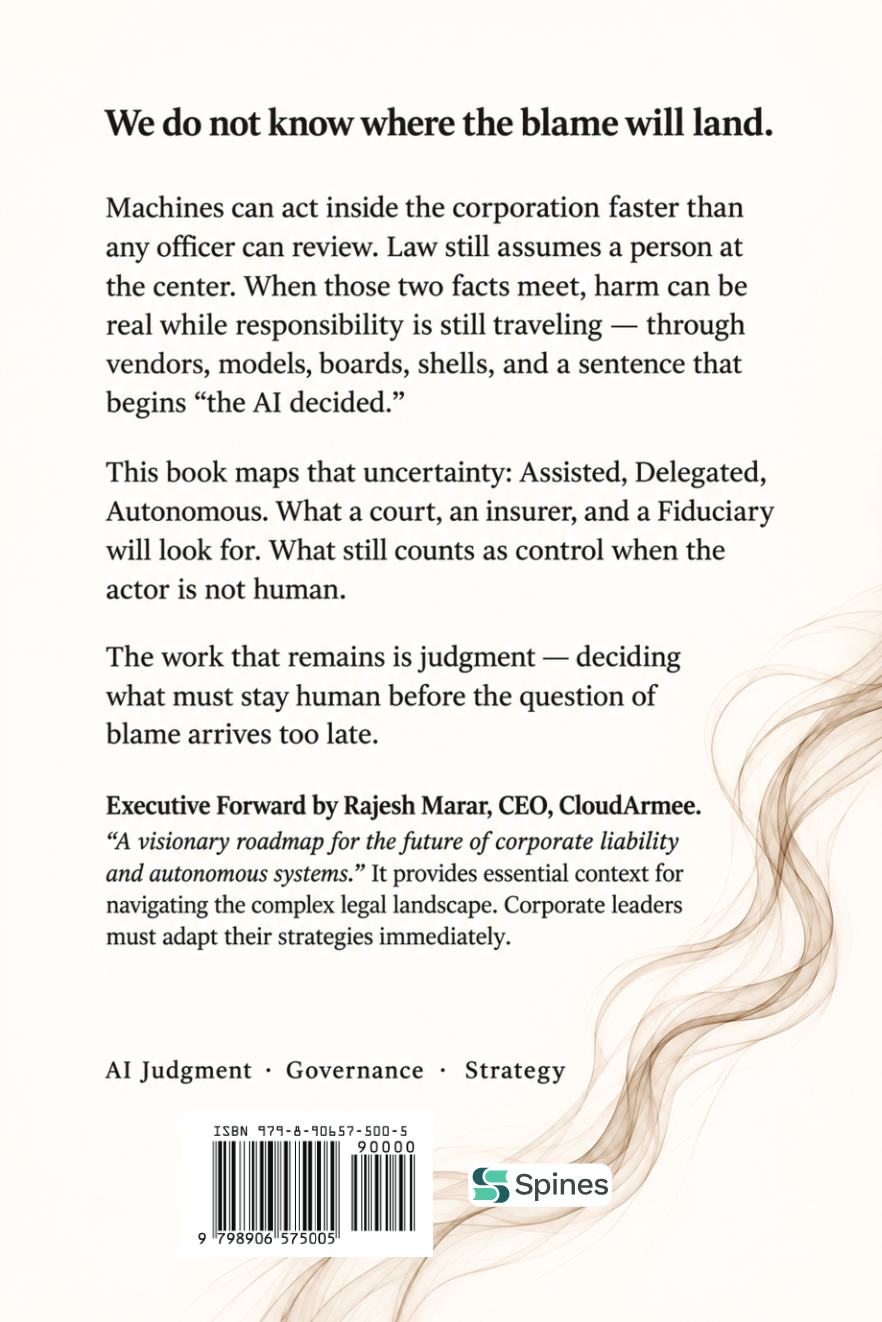
AI Personhood: The Liability Sink names the problem and gives you a framework to fix it before we scale autonomy further.
1. How Personhood Was Granted Without Law
How AI moved from tool to actor through product design, terms of service, and practice, not legislation.
2. How the Liability Sink Works
Why current law lets harm flow through the system while responsibility flows nowhere.
3. Why Governance Without Decision Clarity Fails
Why checklists, policies, and guardrails cannot fix a system where humans have outsourced judgment.
4. A Liability First Framework for AI Personhood
What a human centered, first principles model must look like if we want AI to empower us, not replace our accountability.
Agentic AI is not coming. It is already filing forms, sending messages, and interacting with live websites.
Every executive, founder, lawyer, policymaker, and builder who deploys AI needs to understand this risk now, not after the next incident.
This book is for leaders who refuse to guess about AI risk.
This book diagnoses the Liability Sink.
The operating system to avoid it is axiommastery.ai
At axiommastery.ai, we make human intelligence visible with first principles decision frameworks for the AI era. Stop guessing. Be decisive. Keep the human as sculptor.
Chuck Chekuri is an AI strategist, AI governance policy advisor at U.S. HUD, AI professor at CSUF, and founder of axiommastery.ai. He is the author of Earned Identity and is building frameworks for human judgment in an AI native world.
Get the book on Amazon:
https://a.co/d/0fB6lPfj
Learn the framework:
https://axiommastery.ai