Offer books to readers everywhere – simply and on your own terms.
Offer books to readers everywhere – simply and on your own terms.
The American republic was built to prevent a king and produced a presidency that acts like one. The same drift has hollowed the rest — a Senate that overrepresents land, a Court that legislates, a Congress captured by parties the Constitution never named, a wealth gradient steep enough to render formal equality a fiction. The institutions still meet, the elections still proceed, the rituals of self-government still hold — but the substance has moved. Power concentrates faster than the architecture restrains it, and the gap is widening.
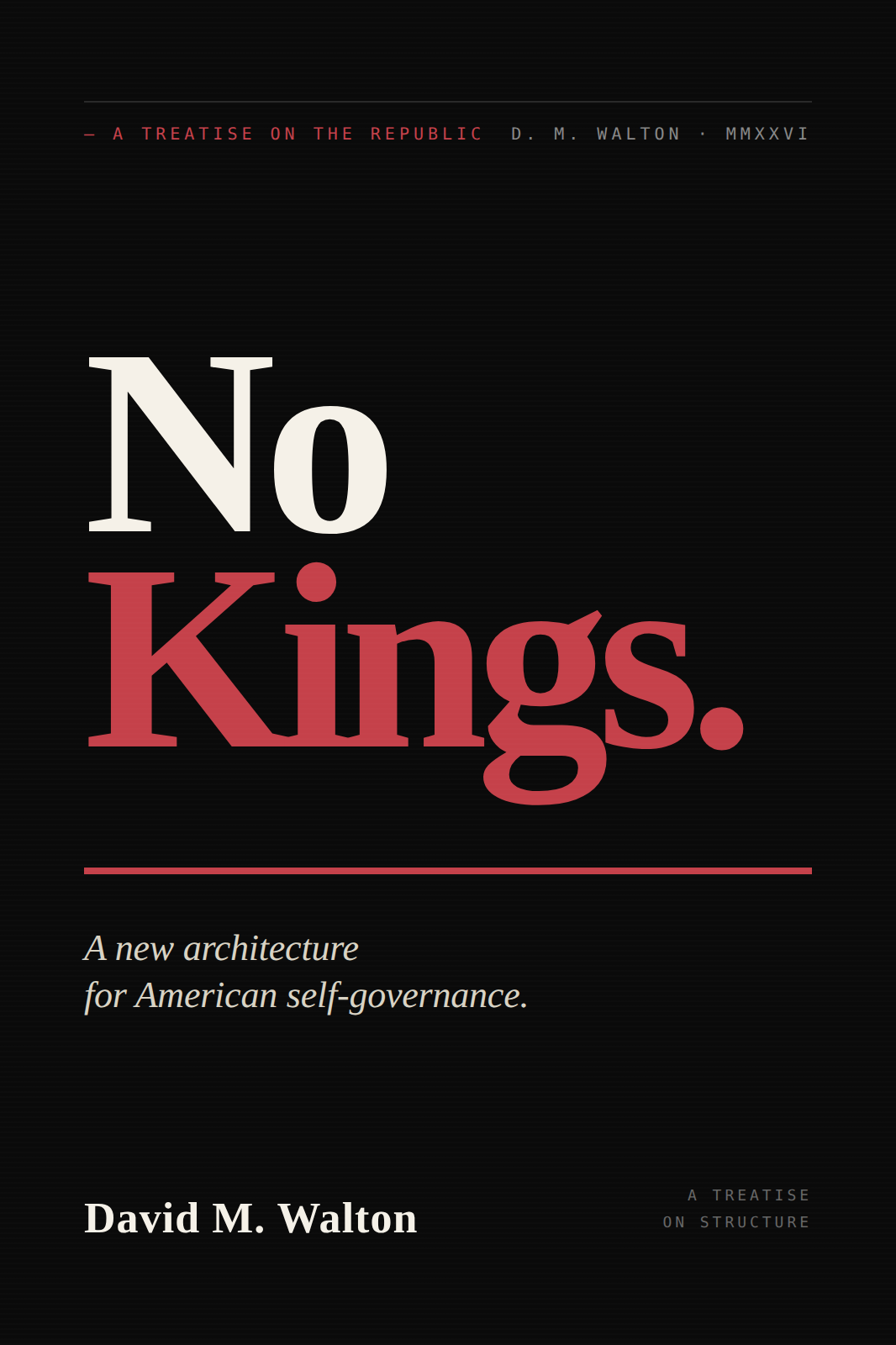
No Kings argues that the problem is architectural, not personal: no reformer wins inside a machine designed to concentrate. The country has spent two centuries betting that the right person in the right office would set things right — and the bet was structurally lost before any name appeared on a ballot. The ordinary corruptions of office now have extraordinary consequences. The next correction has to be made in the structure itself.
The book names the fix in specifics. A constitutional income floor and ceiling, indexed and locked at a 1,000:1 ratio. An expanded House sized to actual representation, with the Senate abolished. Political parties banned by law. Borda-count ranked-choice voting. A presidency stripped of its monarchical residue, its powers redistributed across the branches that were always meant to hold them.
The case is engineered, not declaimed: each proposal addresses a documented failure mode, each is defended on the merits it would have to win on. The result is a blueprint for a republic in which no person holds power enough to rule all others.